3D Printed Y-Zipper Opens New Possibilities for Adaptive Design
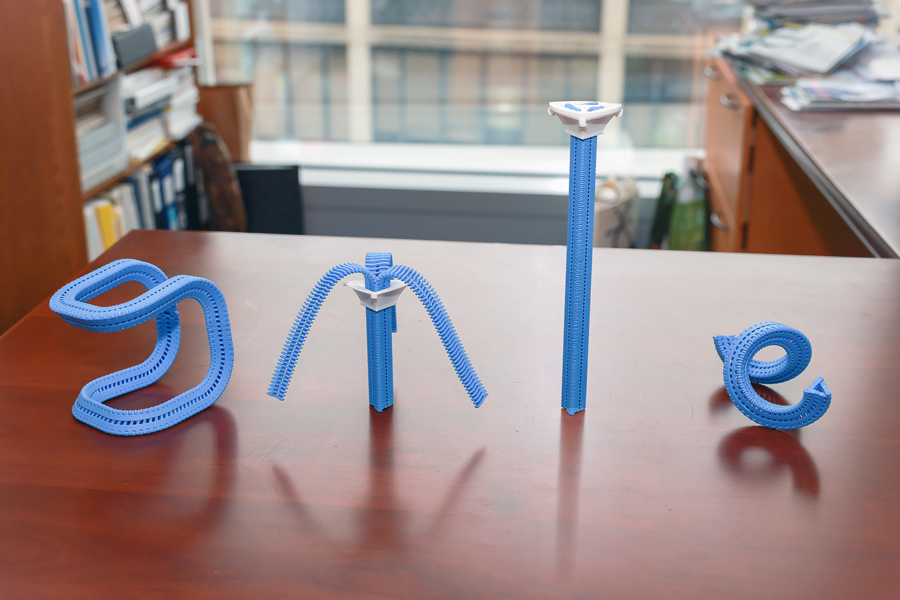
Researchers at the Massachusetts Institute of Technology (MIT) have developed a new type of three-sided zipper that lets objects switch between soft and rigid forms. Called the “Y-zipper”, the system combines digital design software with 3D printing to create adaptable structures for wearables, robotics and temporary shelters.
The idea first appeared in the 1980s, when MIT Professor William Freeman patented a triangular zipper mechanism. He imagined products that could quickly change from compact and flexible to stable and structural. At the time, manufacturing technology limited the concept. Researchers at MIT’s Computer Science and Artificial Intelligence Laboratory (CSAIL) have now revisited the design using advanced fabrication tools and computational software.
Flexible Structures With Adjustable Stiffness
Unlike traditional zippers made for flat surfaces, the Y-zipper creates three-dimensional transformations. Users can control the shape, curvature and movement of the zipper through a digital design tool before fabrication. Once zipped, the structure becomes stiff and stable. When unzipped, it returns to a flexible and compact form.
The research team demonstrated several possible applications. One example showed a tent that could be assembled much faster than conventional versions. Another example featured robotic legs that adjust their height depending on terrain conditions. The team also created a wearable wrist support that users can loosen during the day and tighten at night.
PLA and TPU Improve Performance
To test the system, the researchers used two common 3D printing materials: polylactic acid (PLA) and thermoplastic polyurethane (TPU). PLA delivered greater stiffness and strength, while TPU provided more flexibility. During durability testing, the Y-zipper completed around 18,000 opening and closing cycles before breaking.
The team now plans to explore stronger materials, including metal, and larger-scale production methods. Future applications could include rapidly deployable emergency shelters, adaptive architectural systems and even space exploration technologies.
New Opportunities for Product and Spatial Design
The Y-zipper highlights how digital fabrication can support more adaptable and lightweight design solutions. By combining flexibility and rigidity within a single structure, the technology could inspire new approaches to collapsible products, responsive interiors and multifunctional systems.
The project also reflects growing interest in efficient manufacturing methods that reduce material use while improving transport and assembly.
Source: MIT
Photo: Tim Malieckal / MIT CSAIL
Comments