WoodFrame Slim Reclaimed Meranti PostConsumer
Request Information
Please sign in first or register for free to contact Intermontage.
- story by MaterialDistrict
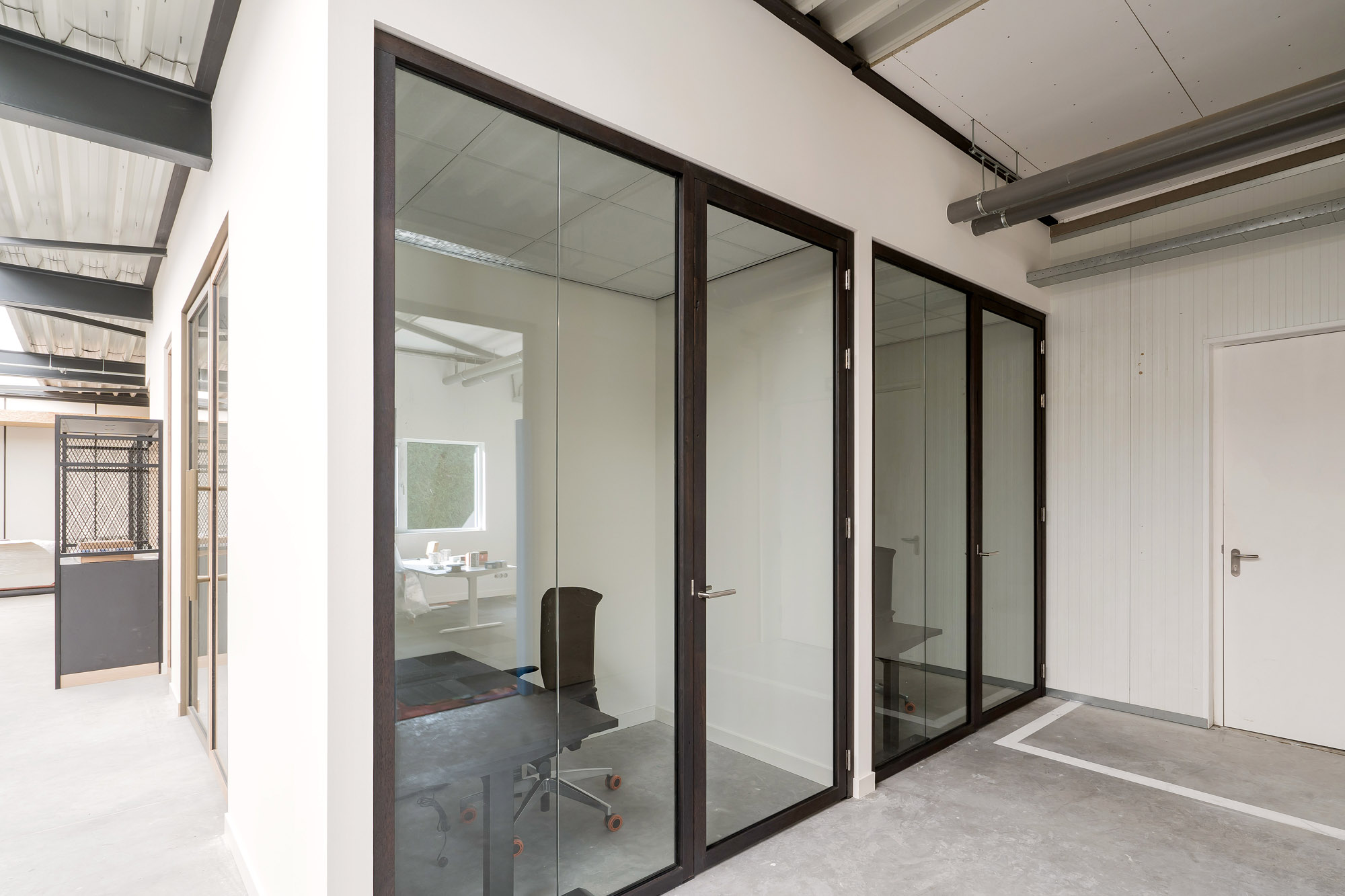
WoodFrame Slim Reclaimed Meranti is a glass partition system manufactured from reclaimed meranti hardwood recovered from Dutch demolition and renovation projects. The system combines a slim timber-framed design with circular construction principles, giving a second life to wood that might otherwise be discarded or used for energy recovery.
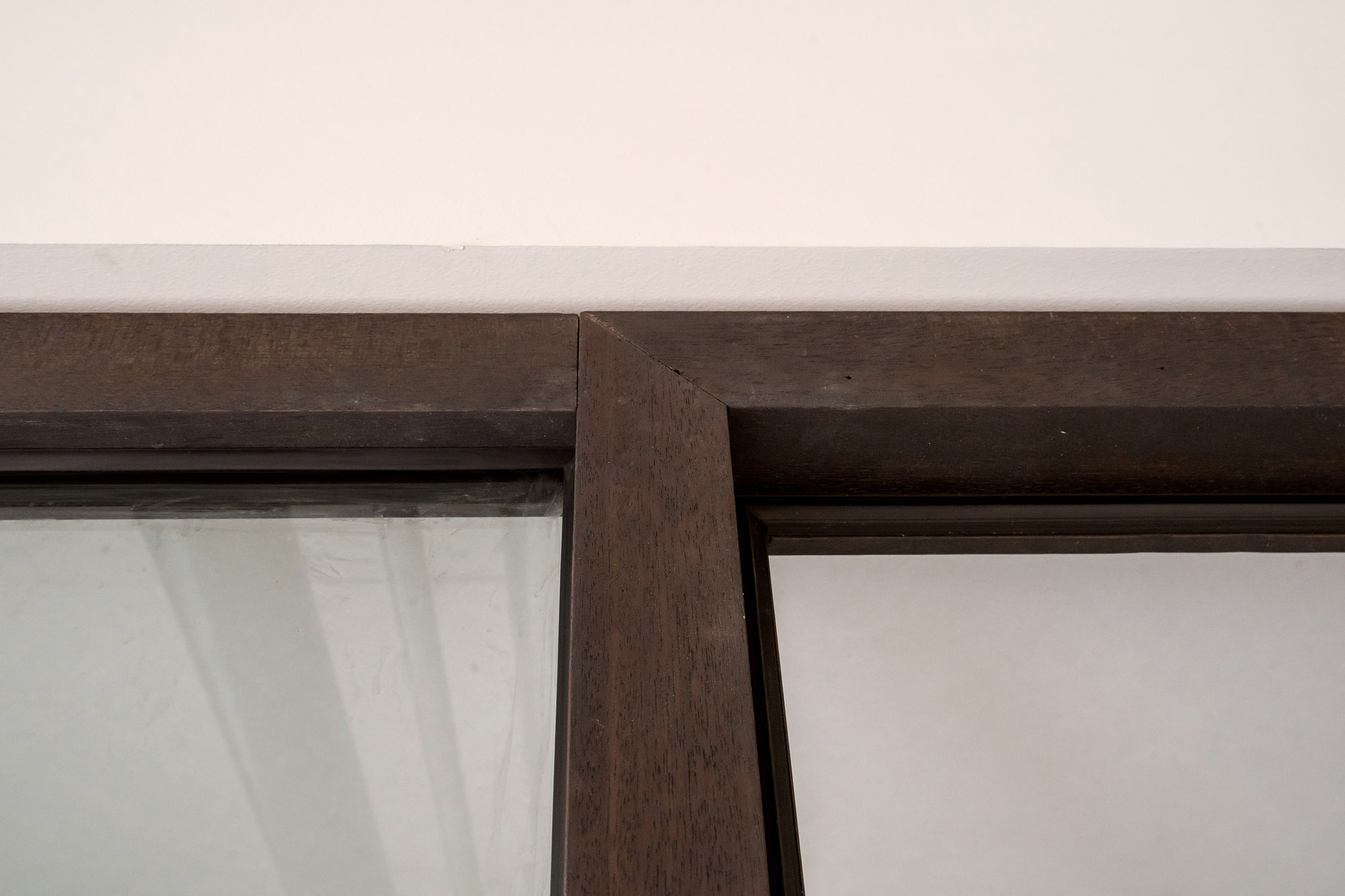
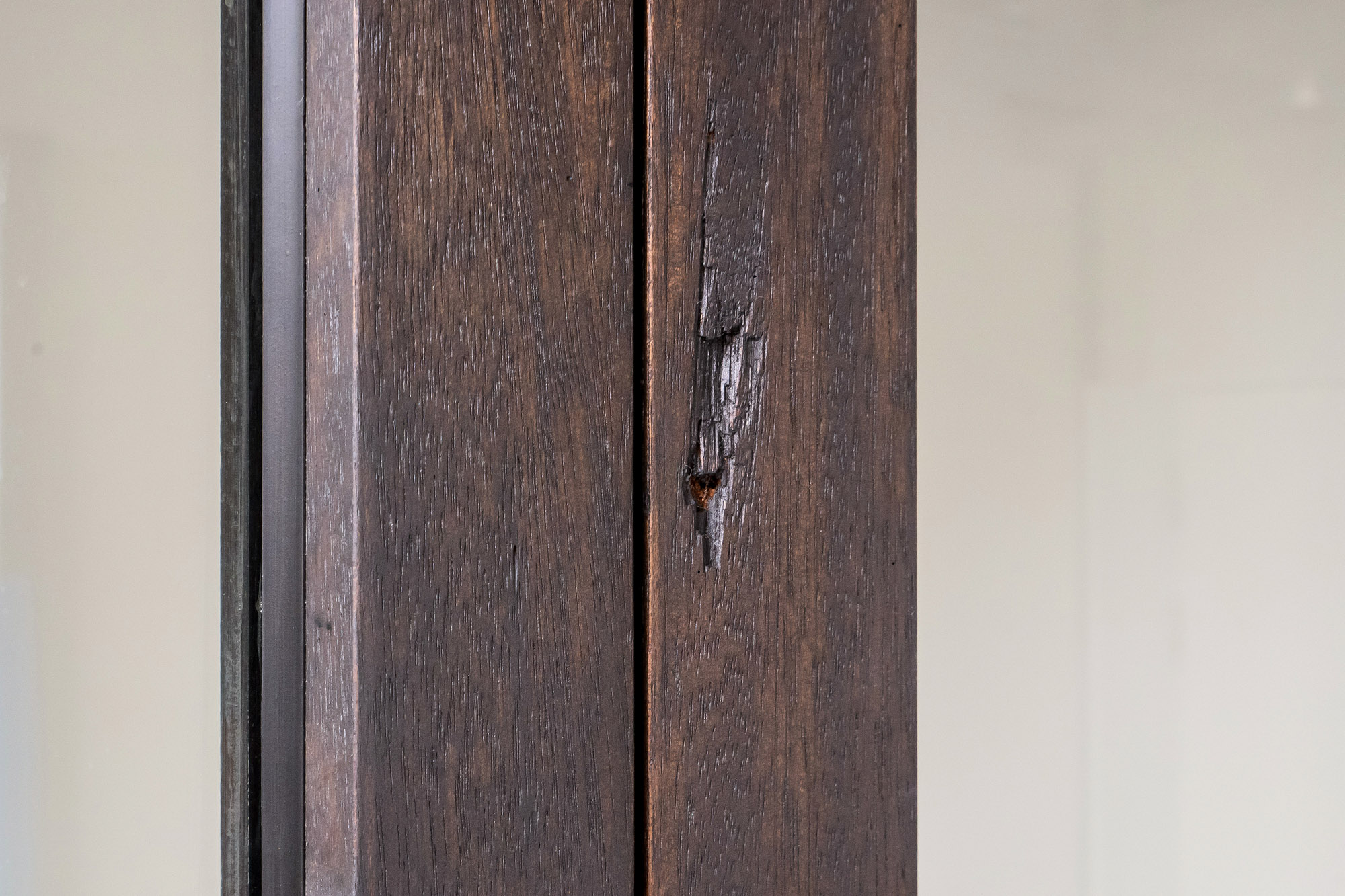
The reclaimed meranti is carefully selected for quality before being cleaned, processed and transformed into new profile elements. The timber is finger-jointed and laminated to create structural profiles that are FSC® Recycled certified. The resulting material retains the character of reclaimed wood while meeting the requirements of a contemporary interior partition system.
Developed in collaboration with Coöperatie Insert, the system forms part of a broader initiative to recover and repurpose building materials from demolition projects. Reclaimed meranti sourced through this network is converted into timber beams and profile components for use in the partition system, supporting material circularity within the built environment.
The profiles are produced using formaldehyde-free adhesives, reducing the presence of potentially harmful emissions in interior spaces. The manufacturing process is designed to maximise the use of reclaimed material while minimising waste generation during production.
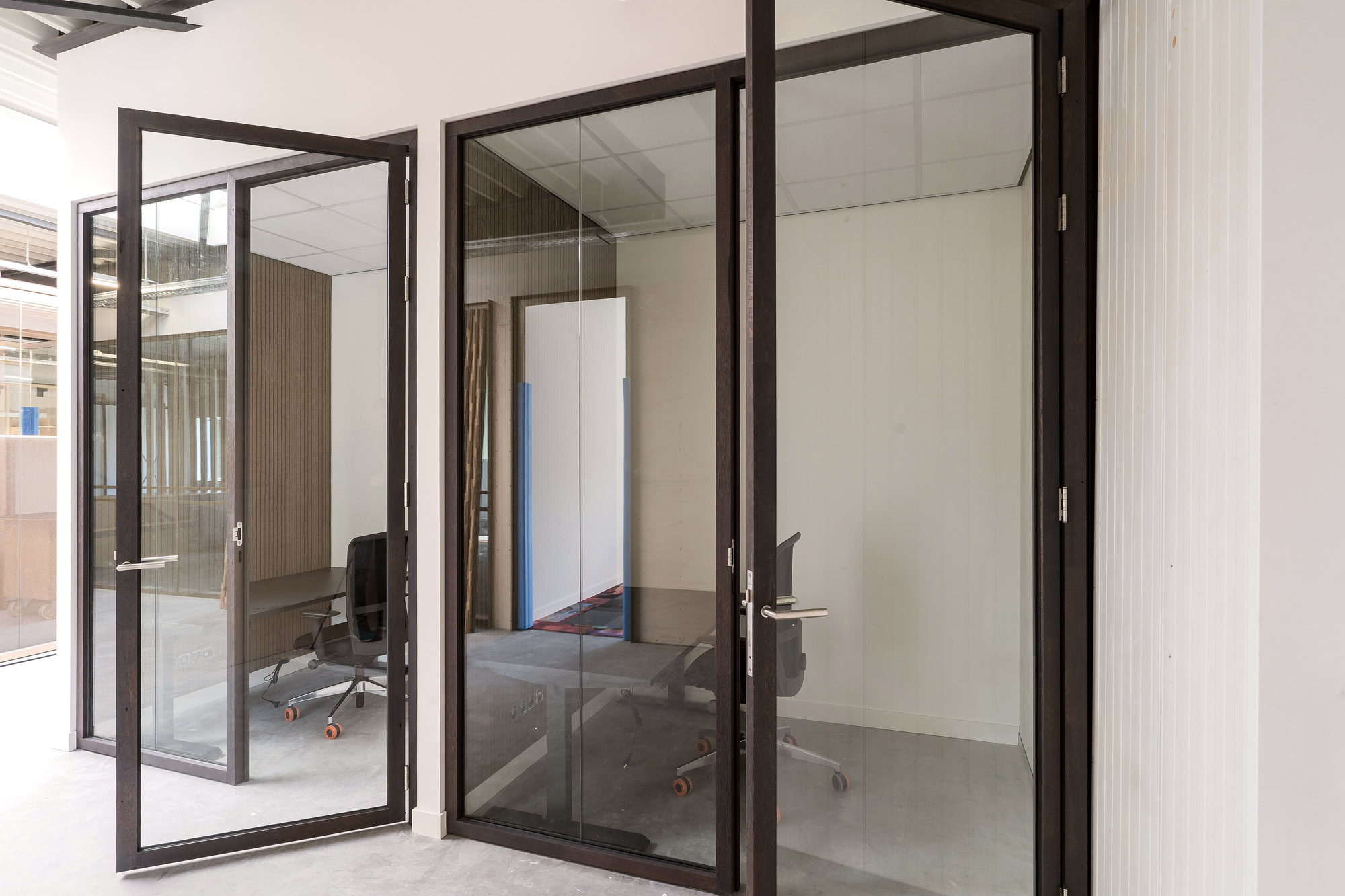
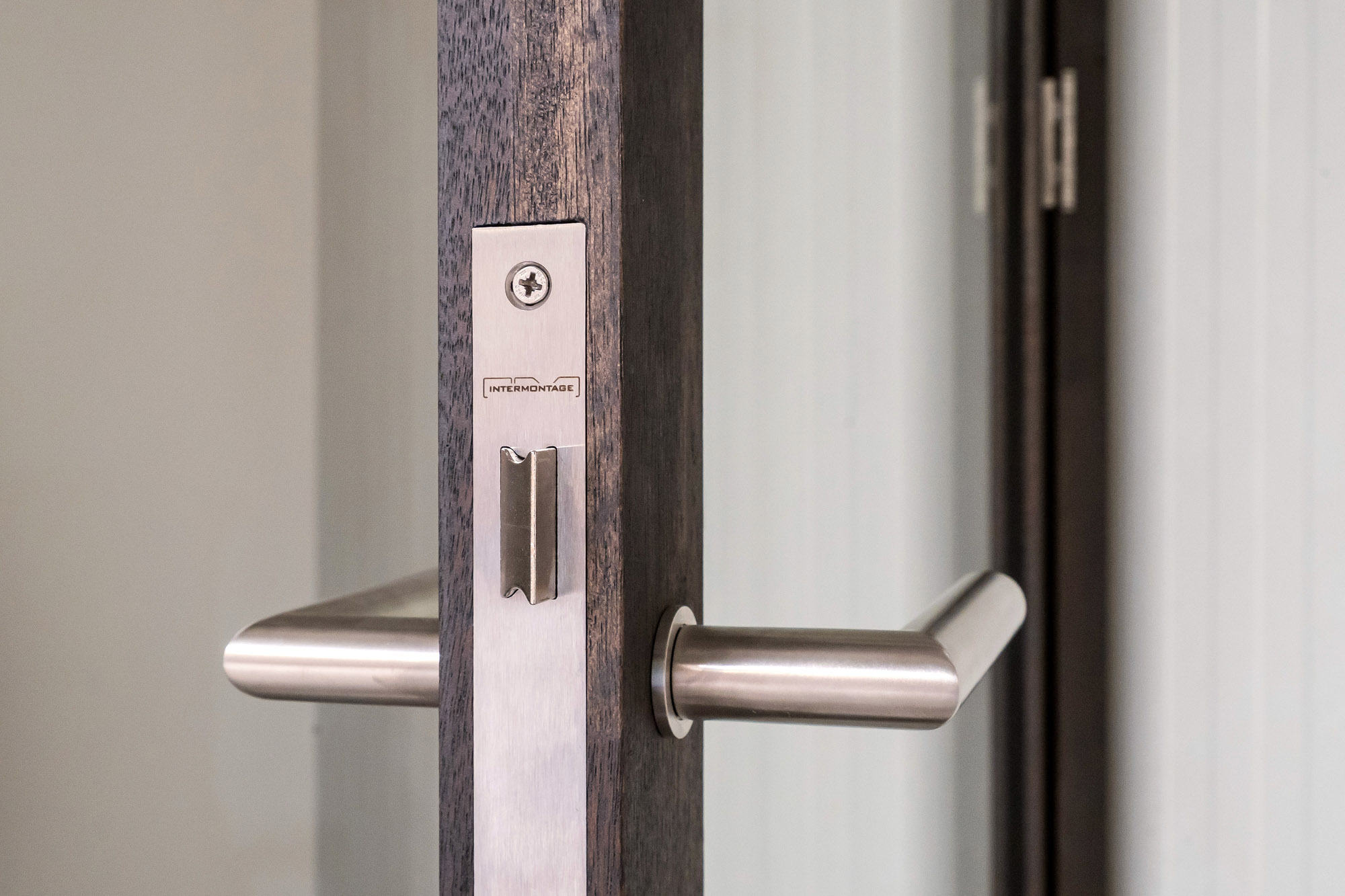
The partition system consists of slim timber profiles integrated with glazed elements, creating a balance between transparency and privacy. A matching timber-framed door and door frame are available, providing a cohesive appearance across the system. Acoustic performance, natural material aesthetics and modular construction make the system suitable for a range of workplace and interior applications.
Designed for disassembly, WoodFrame Slim Reclaimed Meranti can be dismantled, relocated and reinstalled in new configurations or locations. This demountable approach extends the useful life of the material and supports future reuse, contributing to a more circular approach to interior construction and fit-out.